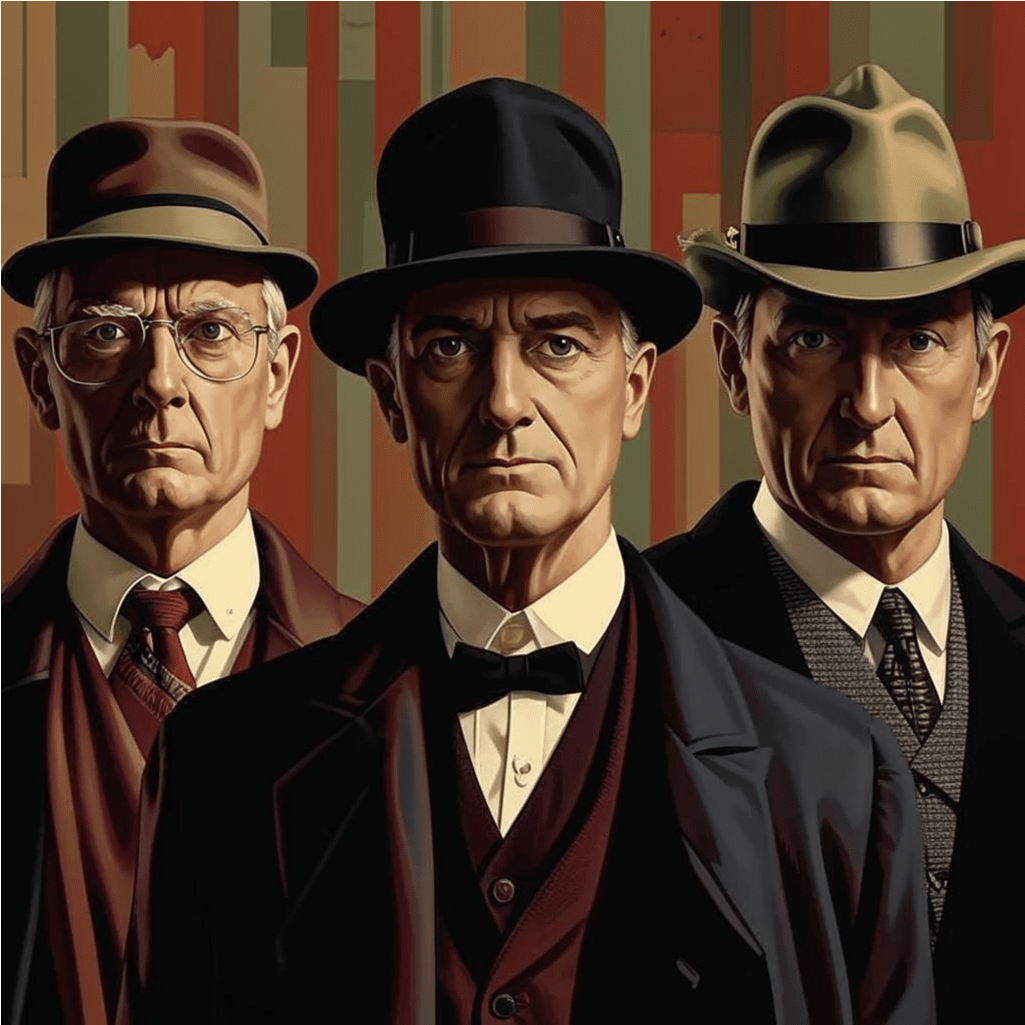
Detectives of legend—Sherlock Holmes, Hercule Poirot, Miss Marple, and others—captured our imaginations with their deductive brilliance.
But beyond their mental acumen, what tools might they have used to solve their cases? Let’s dive into the realm of historical spy devices and how these might have helped these iconic sleuths crack the toughest mysteries.
The Sleuths and Their Spycraft
1. Sherlock Holmes
While Holmes primarily relied on observation and deduction, his Victorian London setting offered early spy tools like acoustic amplifiers (ear trumpets) and mechanical sound recorders. Holmes might have adapted such devices to eavesdrop on suspects or gather evidence.
2. Hercule Poirot
Agatha Christie’s Poirot was meticulous and precise. In the 1920s and 1930s, wire recorders and discreet photographic equipment became available. Poirot could have easily incorporated miniature cameras or cleverly concealed audio devices into his arsenal to support his methodical investigations.
3. Miss Marple
Though her methods were grounded in understanding human nature, Miss Marple’s penchant for observation would pair well with discreet devices like hidden mirrors or small telescopes. These tools could aid in surveilling suspects without arousing suspicion.
4. Augustus Dupin
Often credited as the first fictional detective, Edgar Allan Poe’s Dupin relied on intellectual prowess. However, he might have employed simple spy gadgets like magnifying glasses, early locks-picking kits, or writing decoders to gather clues.
5. Philip Marlowe and Sam Spade
These hardboiled detectives from American noir thrived in the mid-20th century, when portable recorders and spy cameras were emerging. They would undoubtedly take advantage of these tools for tailing suspects or gathering evidence in smoky jazz clubs and dark alleyways.
Tools of the Trade: Historical Spy Devices
- Acoustic Listening Devices: Horn-shaped tools to pick up distant sounds.
- Concealed Cameras: Miniature versions that could fit in hats or walking sticks.
- Microphones and Wiretapping: Available in the 20th century, these allowed for secretive audio surveillance.
- Coded Messages and Decoders: Essential for passing and deciphering information undetected.
- Magnifying Glasses: Basic but effective, they were indispensable for examining physical clues.
How They Compare to Modern Gadgets
Today’s GSM listening devices, hidden cameras, and voice-activated recorders make the tools of old seem quaint. Imagine how Holmes or Poirot might have wielded Wi-Fi-enabled microphones or smartwatches with recording capabilities to outwit their adversaries.
The Legacy of Spycraft in Detective Fiction
The use of gadgets—whether real or imagined—underscores the timeless allure of solving mysteries. Modern detectives owe much to these fictional forebears, whose clever use of technology set the stage for today’s investigative techniques.
We offer you our eavesdropping devices - https://spy-il.com/shop, which can help you in everyday life without harming your relationships with the law and people.